WELCOME TO ELOAĦ
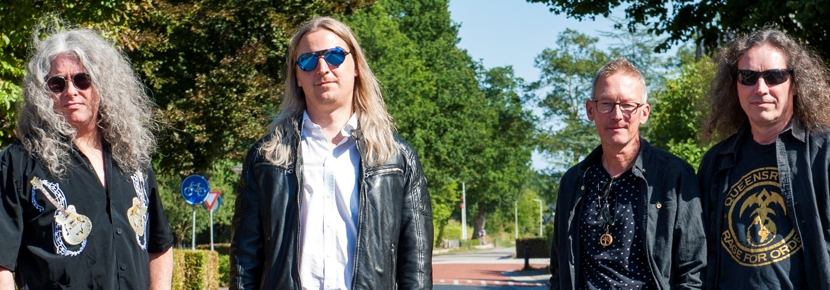
ELOAĦ is a musical project coordinated by Elmar C. Fuchs, founded in 1993. Rather than a fixed band, it is an international ensemble of musicians brought together for each project, combining diverse backgrounds and artistic voices. — 日本の皆様へ
Rooted in art rock, ELOAĦ blends elements of rock, jazz, classical and experimental music. The compositions range from intimate, song-oriented pieces to expansive, atmospheric works, often exploring themes of emotion, transformation and inner experience.
Each project follows its own concept while allowing creative freedom for the participating musicians, resulting in a vivid and evolving musical language.
In the above image, from left to right, we see Dominik Mittergradnegger (saxophone), Elmar C. Fuchs (vocals, guitars, piano), Johan van der Meer (drums and percussion), Orion Roos (electric guitars), Lila Herderberg (vocals), Zarja Medved (viola) and Peter Douwenga (bass guitars).
In addition to ELOAĦ, Elmar C. Fuchs also performs with the improvisational duo Srečno with ELOAĦ violist Zarja Medved, exploring a more immediate and spontaneous form of musical expression in live settings.
ELOAĦは、作曲家エルマー・C・フックスを中心とする国際的な音楽プロジェクトです。固定されたバンドではなく、作品ごとに異なる音楽家たちが集い、柔軟な編成のもとで制作を行っています。
プログレッシブ/アートロックを基盤に、ロック、ジャズ、クラシック、実験音楽の要素を融合し、感情や変容、内面的・精神的なテーマを探求しています。
それぞれの作品は独自のコンセプトを持ちながら、参加メンバーの創造性を活かし、多彩で流動的な音楽表現へと結実しています。
また、ELOAĦの活動から生まれた即興デュオSrečnoとしても活動しており、ヴィオラ奏者Zarja Medvedとともに、ライブにおいてより直接的で即興的な音楽表現を探求しています。
Above band photography
The upcoming album Cosmic Glory expands the musical language of ELOAĦ, blending progressive art rock with electronic and orchestral elements. Conceived as both a sonic and visual work, the limited edition is planned as a transparent vinyl release with embedded gold elements.
『Cosmic Glory(コズミック・グローリー)』は、2026年にリリース予定の新作です。
Water's Not Just H₂O is the first single from the forthcoming ELOAĦ album Cosmic Glory.
The Book of Pain is a collection of 17 songs, each exploring a distinct facet of emotional intensity — fear, anxiety, loss and inner conflict.
Proud to Love You explores the emotional spectrum of romantic love—ranging from quiet serenity and intimacy to longing, tension and release. Introduction to the Mondstein Trilogy
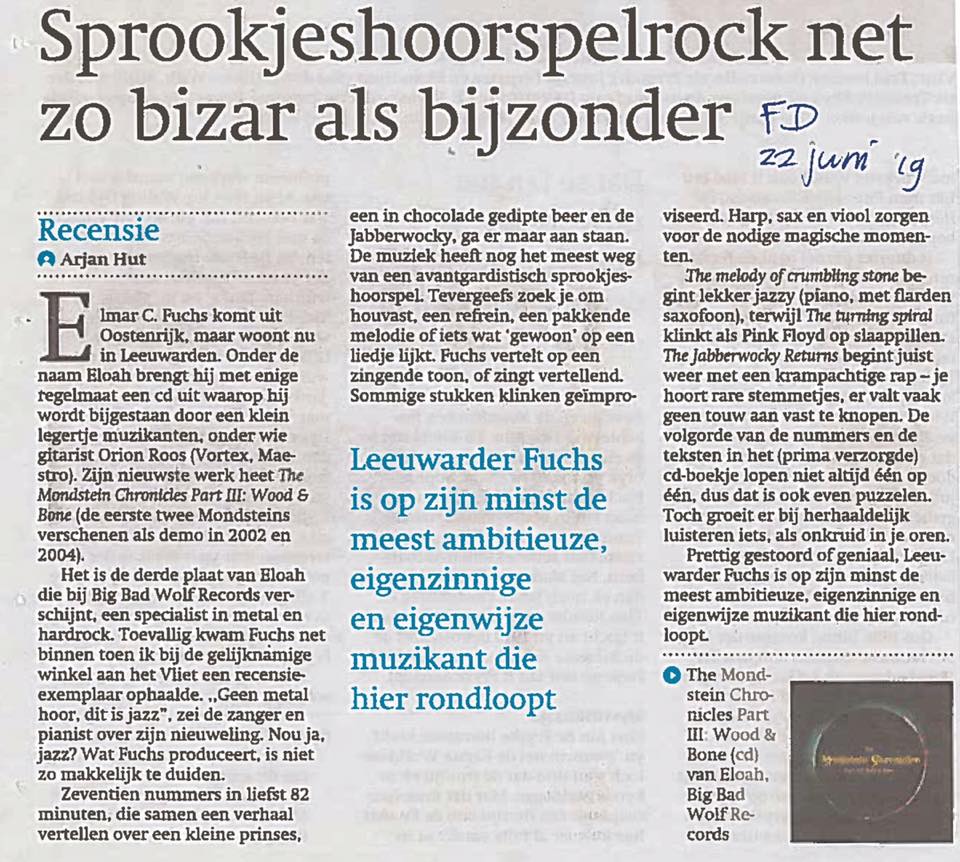
The Mondstein Chronicles is a three-part series of albums based on free improvisation, developed across more than two decades. Originating from intimate sessions of piano, drums and voice, the recordings capture moments of spontaneous creation, later expanded into layered and immersive soundscapes. 『モンドシュタイン・クロニクルズ』は、20年以上にわたって展開してきた、即興演奏を基盤とする3部作です。 2022: The Mondstein Chronicles Part 1 - Awaken the Gods
The Mondstein Chronicles – Part 1: Awaken the Gods originates from early improvisational recordings by Elmar C. Fuchs and the late Jörg Horner in the early 1990s. Based on intimate piano and non-verbal vocal sessions captured on tape, these fragments were later revisited, expanded and carefully shaped into a complete work.
At its core, the album is not built on traditional songwriting, but on free musical interaction — moments of spontaneous creation, preserved and developed across time. The original material is extended with additional instrumentation, including drums, electric guitars and orchestral elements, transforming raw improvisation into a layered and immersive sonic landscape.
Rather than following fixed song structures, the music unfolds in wave-like movements, guided by atmosphere, intuition and inner resonance. Awaken the Gods marks the origin of the Mondstein Chronicles—a work that bridges past and present, capturing the spirit of its initial creation while expanding it into a broader, almost ritualistic musical experience. The vocal elements are not lyrical in a traditional sense, but emerge as phonetic, language-like expressions—used as an instrument rather than a carrier of defined meaning.
The Mondstein Chronicles – Part 2: Ample Jazz continues the improvisational approach of the series, based on free sessions of piano, drums and non-verbal vocal improvisation recorded in the early 2000s. As in Part 1, the voice functions not as a lyrical medium but as a sonic element — improvised, fragmentary and often resembling an abstract or invented language. In contrast to Part 1, this material was captured in a more developed and dynamic setting, allowing for a broader interplay between the musicians.
The focus here shifts away from lyrical expression towards atmosphere, texture and movement. Flowing piano passages, subtle rhythmic structures and expressive flute lines shape a sound that moves between introspective calm and gentle expansion.
As with all Mondstein Chronicles releases, the music evolves from spontaneous interaction rather than predefined composition. Additional instrumentation enhances the original recordings, transforming them into layered, immersive soundscapes.
Ample Jazz represents the unfolding of the cycle — a more fluid and dreamlike chapter, where improvisation opens into space, resonance and quiet intensity.
The Mondstein Chronicles – Part 3: Wood & Bone continues the improvisational foundation of the series, based on free sessions of piano, drums and voice recorded around 2017. In contrast to the earlier parts, this chapter introduces a more defined vocal presence, with Adam D. Wexler performing in English — his lyrics emerging spontaneously in the moment, shaped between improvisation and fragmentary text.
The music unfolds as a sequence of evolving sonic scenes rather than fixed songs. Piano-driven structures, rhythmic impulses and intuitive vocal expression intertwine, creating a fluid interplay between narration and abstraction — at times spoken, at times sung, often hovering between the two.
As in the previous parts, the compositions arise from direct interaction rather than predefined form, developing in wave-like movements guided by atmosphere and inner coherence. Additional instrumentation expands the original sessions into layered, immersive sound worlds.
Wood & Bone represents the culmination of the Mondstein Chronicles — a work of strong individuality and artistic independence, where improvisation, narrative gesture and musical structure converge into a continuously unfolding experience. 2017: Fragile Mind & Heart of Glass (the end of wisdom) 2015: Planet Zargo
『Planet Zargo』は、ゆるやかなSF的モチーフのもとで展開される、多彩で自由度の高い作品です。 『The Art of Loving』は、ELOAĦの音楽世界が大きく広がった作品であり、多様な演奏者と楽器によって織り上げられた豊かな音世界を特徴としています。 『Ode to Brother Horn』は、個人的な原点であると同時に、一人のかけがえのない音楽的伴侶への捧げものでもあります。 Early recordings and demo releases (2000–2009) Just Blood marks the earliest chapter of ELOAĦ, a work shaped not in the studio alone, but on stage. The material on this album formed the core of the live performances between 1998 and 2002, capturing a direct and immediate connection between musicians and audience. 『Just Blood』は、ELOAĦの最初期を象徴する作品であり、1998年から2002年にかけてのライブ活動の中心となった楽曲を収めています。DISCOGRAPHY
Cosmic Glory – forthcoming double LP (2026)
本作はプログレッシブ/アートロックを基盤に、電子音やストリングスを取り入れた作品として構想されています。
透明ヴァイナルに金の要素を取り入れた、特別仕様の限定2枚組LPとして企画されています。
Combining rock, electronic music, choir textures and atmospheric sound design, the song explores a simple yet profound idea: water may be far more than a collection of H₂O molecules.
Inspired by scientific research into the unusual properties of water, the lyrics move between observation, wonder and contemplation, while the music travels from trance-inspired electronic passages and processed vocals to soaring viola melodies and a powerful guitar and saxophone finale.
Standing between science and imagination, Water's Not Just H₂O serves as an invitation to look beyond appearances and rediscover one of the most familiar substances on Earth with fresh eyes.
プログレッシブ・ロック、エレクトロニック・ミュージック、コーラス、そして幻想的なサウンドスケープを融合させながら、本作は「水は単なるH₂Oではないかもしれない」というシンプルでありながら深遠な問いを描いています。
水が示す不思議な性質に関する科学的研究に着想を得た歌詞は、観察・驚き・内省の間を行き来し、音楽はトランス的な電子サウンドや加工されたボーカルから、美しいヴィオラの旋律、そして壮大なギターとサックスによるクライマックスへと展開していきます。
科学と想像力のあいだに立つ『Water's Not Just H₂O』は、私たちにとって最も身近な存在である「水」を、新たな視点から見つめ直すための招待状です。
Moving between intimate acoustic passages, atmospheric soundscapes and moments of raw, heavier expression, the album translates deeply personal experiences into a diverse musical language.
Rather than avoiding discomfort, these songs confront it directly: each track emerges from a state that demanded to be felt, understood and transformed. Through composition and performance, emotional tension becomes resonance, and vulnerability is shaped into sound.
The result is not merely a reflection on pain, but a process of transformation — an artistic journey in which inner struggle is neither suppressed nor resolved, but consciously expressed and carried beyond itself.
静謐なアコースティック、空間的なサウンドスケープ、そして時に激しい表現を通して、内面的な体験が多様な音楽言語へと置き換えられています。
感情から逃れるのではなく、それと向き合い、音へと昇華していく過程そのものが、本作の核となっています。
本作は、BigBadWolf Recordsより楽曲を厳選した手番号入りの限定アナログLPとしてもリリースされています。
The fourteen songs move between warm, song-oriented arrangements and more atmospheric, introspective passages, always centered around melody and emotional clarity. Compared to other ELOAĦ releases, the focus here lies more on connection, light and affirmation, while still acknowledging the vulnerability and uncertainty inherent in love.
Rather than asking questions, the album embraces experience: love as a force that can transform, sustain and elevate. At its core, Proud to Love You is an invitation—to listen, to feel, and to allow music to enter the inner space where emotion becomes meaning.
静かな親密さ、憧れや揺らぎ、そして解放へと至る心の動きを、旋律を軸とした楽曲によって表現しています。
他の作品に比べ、本作はより温かさやつながり、肯定的な感情に光を当てつつ、愛にともなう繊細さや不確かさもあわせて内包しています。
音楽を通して感情に触れ、それを内面に響かせるための招待状のようなアルバムです。
Across the trilogy, the music evolves from non-verbal, purely sonic expression to the emergence of language within improvisation—tracing a movement from sound to meaning, from intuition to form.
ピアノ、ドラム、声による親密なセッションから生まれた音の断片は、のちに多層的で没入感のある音世界へと発展していきました。
このシリーズでは、言語を持たない純粋な音の表現から、即興の中に言葉が立ち現れてくる過程が描かれています。
それは、音から意味へ、直感から形へと向かう流れでもあります。
ピアノと声による親密なセッションから生まれた断片は、後年あらためて取り上げられ、再構成と発展を経て一つの作品へと形づくられました。
本作は従来の楽曲構成ではなく、即興的な相互作用から生まれる音の流れを核としており、そこにドラム、ギター、オーケストラ的要素が加えられています。
音楽は波のように展開し、直感と空間的な響きによって導かれていきます。
本作は「モンドシュタイン・クロニクルズ」の原点であり、過去と現在を結びつける音の記録でもあります。
なお、声は言語としてではなく、音そのものとして即興的に用いられています。
第1作に比べ、より発展した演奏環境の中で録音されており、音楽的な対話にもいっそうの広がりが感じられます。
本作では歌詞的な要素よりも、音の質感や流れ、空間の広がりに重点が置かれています。
流動的なピアノのフレーズ、繊細なリズム、そして表現豊かなフルートの旋律が、静けさと拡張性をあわせ持つ音世界を形づくっています。
即興から生まれた音楽は、後のアレンジによって多層的なサウンドへと展開されます。
シリーズの中盤に位置する本作は、より夢幻的で流動的な様相を示しています。
ここでも声は、言語ではなく音として扱われています。
本作では、Adam D. Wexlerによる英語のヴォーカルが導入されていますが、その多くは演奏と同時に即興的に生まれた言葉です。
語りと歌のあいだを行き来するような表現が、音楽に独特の物語性を与えています。
楽曲は固定された構造に従うのではなく、場面が移ろうように展開し、ピアノ、リズム、声が有機的に絡み合っていきます。
本作はシリーズの集大成として、即興と構造、音と言葉が静かに交差する地点を示す作品です。
Fragile Mind and Heart of Glass is the most expansive and conceptually intricate work of ELOAĦ to date — a musical narrative that brings together multiple storylines and philosophical perspectives within a single, unified sonic framework. Blending elements of art rock, chanson and theatrical composition, the album unfolds as a “musitale”: a continuous interplay of song, atmosphere and narrative.
At its center stands a dreamer whose inner visions mirror the passions, contradictions and absurdities of human existence. The music moves between powerful, unconventional and deeply fragile moments, reflecting the shifting emotional states of this journey.
Originally conceived in 2002 in collaboration with Jörg Horner, the project remained unfinished following his tragic death and was later released in an early form as The End of Wisdom – A Musitale.
Fragile Mind and Heart of Glass represents the completion of this long-evolving work—its definitive realization. More than a reworking, it is a closing of a circle: a transformation of an unfinished idea into a fully realized artistic statement, shaped across time, loss and persistence.
『Fragile Mind & Heart of Glass』は、ELOAĦの作品群の中でも最も壮大で複雑なコンセプト作品の一つであり、複数の物語と哲学的視点を一つの音楽的世界へと統合した作品です。
アートロック、シャンソン、そして演劇的要素を融合し、「ミュージカル的」な構成として展開されます。
その中心には一人の夢見る人物が存在し、内的なヴィジョンを通して、人間の情熱や矛盾、不条理が映し出されます。
音楽は力強さ、異質さ、そして繊細さのあいだを揺れ動きながら、この内面的な旅を描いていきます。
本作は2002年にヨルク・ホルナーとの共同制作として構想されましたが、彼の死により未完のままとなり、のちに『The End of Wisdom – A Musitale』として一度発表されました。
本アルバムは、その構想を完成へと導いた決定版であり、時間と喪失を経て実現された一つの到達点でもあります。
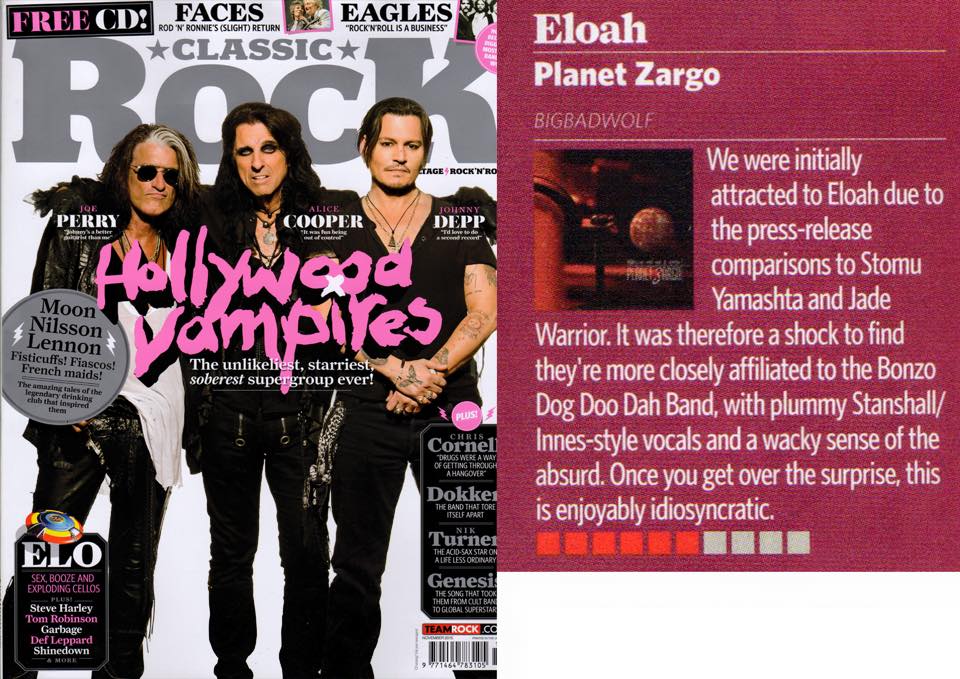
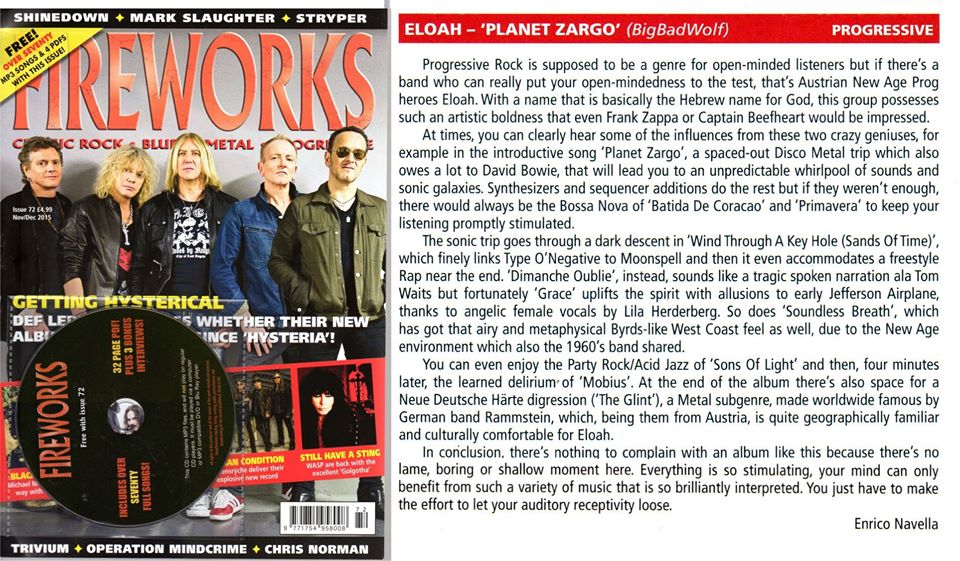
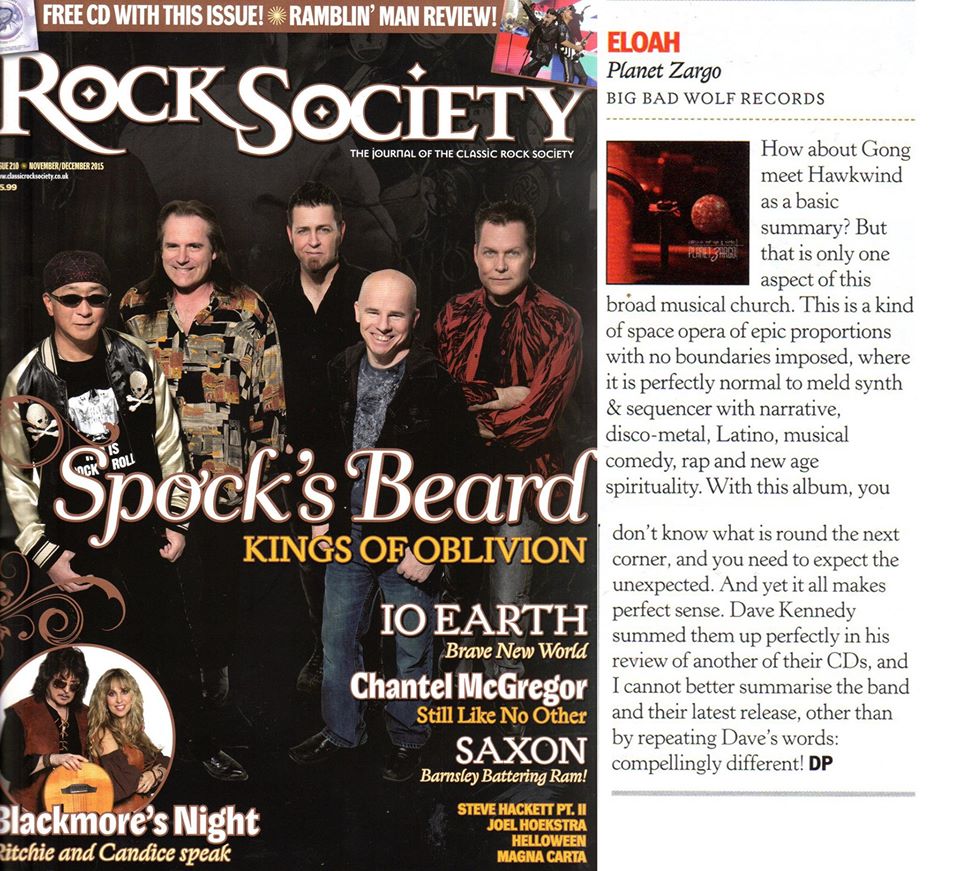
Planet Zargo expands the ELOAĦ universe into a vibrant, genre-defying sound world shaped by a loose science-fiction narrative. Rather than a traditional concept album, it unfolds as a series of interconnected sonic episodes — inhabited by imagined visitors, shifting perspectives and a quietly underlying sense of optimism.
Musically, the album embraces a deliberately wide spectrum: from synthesizer-driven sequences and expansive rock passages to Latin-influenced rhythms, theatrical interludes and moments of intimate, reflective songwriting. Elements such as harp, erhu and layered electronic textures further extend the sonic palette, while spoken and narrative fragments echo earlier Mondstein-like approaches.
With the introduction of vocalist Lila Herderberg and an expanded ensemble, the music gains both contrast and color, moving freely between styles without settling into a single identity. What might initially appear as unpredictability reveals itself as a coherent artistic vision — an open musical space in which contrasting elements coexist and interact.
Planet Zargo is perhaps the most playful and exploratory ELOAĦ release: a kind of “space opera without boundaries”, where each turn invites the unexpected — yet ultimately forms part of a larger, meaningful whole.
明確なコンセプトアルバムではありませんが、異なる場面や視点が連なり、一つの音楽的世界をかたちづくっています。
シンセサイザー、ロック、ラテン的リズム、物語的要素などが共存し、さらにハープや二胡といった楽器が加わることで、音の広がりはいっそう豊かなものとなっています。
一見すると予測不能に思える展開も、全体としては一貫したヴィジョンのもとで結びついており、自由で開かれた音楽空間を生み出しています。
本作は、ELOAĦの中でもとりわけ遊び心と探究心に満ちた一枚です。
The Art of Loving marks a decisive expansion of the ELOAĦ sound into a richly textured, ensemble-driven musical landscape. Bringing together an extended group of musicians, the album unfolds as a carefully balanced interplay of voices, instruments and styles — ranging from art rock and folk to jazz, avant-garde and new-age elements.
While not a strict concept album, its many facets are quietly connected by a central theme: redemption. This idea appears in different forms — sometimes profound and introspective, sometimes playful or ironic, yet always pointing toward a deeper unity beneath the surface diversity.
The music moves freely between intimacy and intensity, allowing each piece the space to evolve organically. Despite the wide instrumentation and stylistic range, the compositions remain focused and purposeful, never losing their inner coherence.
Rather than a collection of songs, The Art of Loving reveals itself as a complete artistic statement: a sonic journey that invites attentive listening and unfolds its meaning gradually—an exploration of love not as sentiment, but as a transformative and unifying force.
アートロック、フォーク、ジャズ、アヴァンギャルドなどの要素が自然に溶け合い、一つの有機的な流れを生み出しています。
明確なコンセプトアルバムではありませんが、「贖い(redemption)」というテーマが全体を静かに貫いており、各楽曲の中にさまざまなかたちで現れます。
時に深く内省的に、時に遊び心を含みながら、その奥には一貫した精神的方向性が感じられます。
音楽は親密さと力強さのあいだを行き来し、それぞれの楽曲が自然に展開していく余白を保っています。
多彩な編成でありながら、作品全体は高い統一感を失いません。
本作は単なる楽曲集ではなく、一つの総合的な芸術作品として成立しています。
注意深く耳を傾けることで、その意味が少しずつ立ち上がってくる、深い音楽的体験です。
Ode to Brother Horn is a deeply personal album, both a musical origin and a tribute.
Jörg Horner, “Brother Horn”, was more than a collaborator: he was a musical companion in the truest sense. We could communicate without words, improvising for hours, allowing the music to emerge on its own. Those moments, pure, unforced, and intuitive, shaped the foundation of what would later become ELOAĦ.
Much of the material on this album was originally composed in the early 1990s, during a time of creative openness and shared exploration. Although these pieces differ from our later improvisational recordings such as Mondstein, they carry the same spirit: the idea of letting go, trusting the music, and allowing it to unfold naturally.
Musically, the album moves between acoustic intimacy and progressive expression, combining elements of folk, new age and classic rock with a warm, often melancholic atmosphere. The arrangements remain spacious and organic, giving each piece room to breathe while maintaining a quiet emotional intensity.
After Jörg’s passing, this music took on a new meaning. What once was shared experience became remembrance.
Ode to Brother Horn is therefore not only a collection of songs, but a gesture of gratitude — an attempt to preserve something that cannot be lost: the presence of a friend, a mentor, and a soul connection that continues to resonate beyond time.
ヨルク・ホルナー(“Brother Horn”)は、単なる共演者ではなく、言葉を超えて通じ合える存在でした。
ともに即興を重ね、音楽が自然に生まれてくる瞬間を共有した経験は、ELOAĦの基盤を形づくっています。
本作の多くの楽曲は1990年代初頭に生まれたものであり、その自由で開かれた創作の精神は今もなお息づいています。
彼の死後、この音楽は新たな意味を帯びるようになりました。
それは記憶であり、感謝であり、そして今もなお続いているつながりの証でもあります。
本作は単なるアルバムではなく、時を超えて響き続ける想いのかたちです。
These works document a formative phase of ELOAĦ — raw, exploratory recordings in which many of the ideas, themes and collaborations that later shaped the official albums first emerged.
初期の録音とデモ作品(2000–2009)
これらの作品は、後の公式アルバムにつながっていく発想や主題、協働の萌芽を記録した、ELOAĦの形成期の記録です。
2007: Die Sternenhafte (spoken word / double CD demo only)
2006: A Matter of Time (demo only)
2004: The End of Wisdom - A Musitale (demo only)
2003: Mondstein 2: ample jazz (demo only)
2002: Mondstein (demo only)
2000 / 2007 / 2009: Silicon Rhythm (demo only)
Musically, the album blends chanson with elements of rock, pop, new age and subtle jazz influences. Acoustic textures and carefully shaped arrangements create an intimate atmosphere, while the interplay between guitar, voice and rhythm gives the music both depth and clarity.
At its heart, Just Blood is driven by emotion rather than concept. Each piece unfolds with a sense of sincerity and presence, reflecting a time when the music was discovered in performance as much as in composition.
In retrospect, the album can be heard as the human and expressive foundation of the ELOAĦ project — where many of its essential characteristics first took shape.
シャンソンを基調に、ロック、ポップ、ニューエイジ、そしてほのかなジャズの要素を織り交ぜた音楽は、親密で率直な表現に満ちています。
ライブの中で育まれたこの楽曲群には、プロジェクトの原点となる人間的で直接的な魅力が息づいています。
PRESS
Interviews, features and reviews
· AATONAU エルマー・C・フックス:科学と音楽のあいだで生まれる表現)
Award for the CD "Ode to Brother Horn"
Sunday, January 18, 2009. "Ode to Brother Horn" is a great new age/progressive album from Austrian musician Eloah fueled by poetic lyrics and excellent guitar and piano work. This is an inspired album, a grouping of songs from the early '90s that Eloah presented to his then-mentor Jörg Horner (Brother Horn) whose memory this album is dedicated to. Eloah's arrangements are truly exceptional, ranging from new age tracks with flute and saxophone to beautiful piano ballads to outstanding acoustic and electric rock compositions to riff-driven hard rock. Eloah's vocal performance has variety to it, but it is ever-haunting, whether he sings in his natural deep bass or in a quiet near-whisper. "Ode to Brother Horn" is well-produced, and the entire album sounds clean and professional. "Paradise Lost" features some great acoustic work, a nice drum beat, and a chilling vocal performance. "You Have Never Been Mine" has a great arrangement that begins with a nice acoustic guitar and drum progression, and is then matched by electric guitar and piano. "The Human Legacy" has a more progressive hard rock sound with heavy guitar riffs, a nice beat, and haunting vocals. Eloah has put together an album that would make Brother Horn proud, filled with skillful arrangements and poetic lyrics. Fans of new age and progressive rock should definitely pick this one up.
-Chris and the RadioIndy.com Reviewer Team
Posted by RadioIndy at 8:03 PM
Ode to Brother Horn:
Rukshan Thenuwara - Muzik Reviews.com
Austrian musician Eloah dedicates his latest album to his late mentor and soul brother Jörg Horner, known affectionately as “Brother Horn.” The album is a collection of beautiful and rather haunting songs sprinkled with Eloah’s low bass voice floating above lush melodies and classic rock elements. The second song off the record, “Paradise Lost” sounds like a melancholy hit with its sad yet poetic lyrics and stellar guitar arrangements while “Chjong Nadah Boo” introduces crashing drums and effervesant vocalizations that juxtapose Eloah’s soft singing only to then re-establish dominance throughout the chorus. “Iron Lady” begins with such an enticing melody that it seems a shame that the artist takes the song in a different direction. So different in fact, that it ends up sounding like a mash up between death metal and acoustic rock acompanied by his dark and heavy vocalizations. “You Have Never Been Mine” on the other hand sounds strangely familiar to the Beatles except for injections of a gravely voice repeating “never ever” during the chorus. Elsewhere, “Hymn to Brother Horn” is an instrumental track filled with electronic melodies fueled by heavy rock infleunces and “Eloah (A Dirge for Brother Horn)” is a soft piano ballad. To display his diverse use of instrumentation and elements, “Listen to Your Soul” is alike a Simon and Garfunkel tune mixed with jazz saxaphones and metal guitars. The result is catchy and engaging, a feat that is hard to pull off with such clarity and harmony. The latter end of the record has a definite soft, melodic sound with Eloah singing in a hushed tone amongst seductive jazz saxaphone elements and guitar strumming like on the swaying “What You Mean To Me” and the equally mellow “Eyes Like a Lioness.” As a whole, Ode to Brother Horn is an enjoyable and innovative album that melds several distinct genres and sounds together. The only detractors to the album’s listenability are the handful of rather long tracks that would have worked better if they had been shortened, rather than adding on musical trains to finish.
Rukshan Thenuwara – MuzikReviews.com Staff November 8, 2009
Ode to Brother Horn:
Nick Tate - Progression Magazine issue 58 (fall 2009)
2008 (CD, 69:48);INDEPENDENT RELEASE
STYLE: PROGRESSIVE/NEW AGE
SOUND 4|COMPOSITION 3|MUSICIANSHIP 4|PERFORMANCE 3
TOTAL RATING 14 (of 16)
Mining the same musical territroy as Stomu Yamashta and Jade Warrior, Austrian artist-musician Elmar C. Fuchs is a new age master with a progressive-rock sensibility. Over the past 25 years, Fuchs (Eloah) has produced a handful of evocative releases merging Eastern and Western music in ways that suggest a kind of Transcendental Meditation. His latest offering, Ode To Brother Horn, is no exception.
Standout tracks a la "Paradise Lost" and "Listen To Your Soul" layer shimmering acoustic guitar flourishes over fluid piano, flute and synthesizer blends. The harder-rocking "Human Legacy" features a strong vocal performance and driving beat, yet maintains Fuchs' restrained, cathartic approach. The only real quibble here is Fuchs' limited vocal range. But he compensates by treating the singing - sometimes whispered, shouted, growled or spoken - to enhance his voice's depth and variety. In the end, the overall affect is nothing short of enchanting. - Nick Tate
Ode to Brother Horn:
Joe Geesin - Get Ready To ROCK!
www.myspace.com/eloahmusic Art-house prog, or New Age Rock. This project was recorded in the 90s and released two years ago, so quite why the PR company is working it now is as mysterious as the music. From flute to new age rhythms, acoustic picking, vocal effects and occasional choir-like backing, and a guitar solo that hints at David Gilmour, and that's just the first track. As you go through the album, there are bigger sounds, drifting vocals, tribal drums, strong guitar, there's a lot going on. The lyrics are warm and there is lots of passion, the album is dedicated to vocalist Elmar Fuchs late friend Jorg 'Brother Horn' Horner. There are some wonderful moments, some good tunes, but the album is punctuated by parts that don't seem to fit or just drift by.
Ode to Brother Horn:
Gabor Kleinbloesem - Strutterzine
The Austrian band ELOAH has a history going back to the early 1990s when bandleader ELMAR C. FUCHS actually created the music of this CD ‘Ode to brother horn’ together with fellow musician JORG HORNER. It was Jorg who taught Elmar how to create music with a soul and in 2008 this CD was originally released, which is a tribute to Jorg, who sadly died in 2004. Musically speaking we are listening to high quality open-minded Progressive Pop/Rock. It does not rock hard or anything like that, but basically what you get is 14 well-written calmer Progressive Pop/Rock songs with a soul. It is very 1970s orientated, like early GENESIS, TEMPEST, JADE WARRIOR and a little JETHRO TULL, GENTLE GIANT and such calm acoustic tingled folksy prog. This one should go down well with the true progfans, because it is a very diverse and relaxing album that offers a lot of interesting song structures. It definitely keeps your attention from start to finish, so make sure to check out ELOAH at: www.eloah.art.net (Points: 8.2 out of 10)
Ode to Brother Horn:
skruttmagazine
The record starts with some odd Japanese woman which is talking about something you don´t understand. And then the record starts with a song which makes me think of some old 70´s movie in westernstuyle or something similar with it´s flute which is whisteling on. When the record then is on I got a little bit of different feelings and I think about bands like Jethro Tull, Mike Oldfield, fairytyles and old progressive music from Sweden. Really cool actually but it´s a little bit hard to understand. But does this sound interesting so check it out for god´s sake.
6/4-2011
Ode to Brother Horn:
Tony - concreteweb.be
My oh my! The things one learns when browsing for info on some musicians on the Internet! You know, I was always taught that the Jewish word for God was “Jahweh”, and here I learn that the Hebrew word for God is actually...you might've guessed it?...”Eloah”!
Well, it is also the name taken by Austrian graphic artist (sorry I didn't check out on that part of his occupations more, but as always time was pressing when I was checking the Internet for the additional info) Elmar C. Fuchs for his “solo” musical escapades, adventures in which he was aided since 1993 by a veritable flock of contributing musicians, the most important of which being Fuchs' friend and soulmate Jörg Horner...the two able to feed upon each other for inspiration, as well as from neo-classical music, New Age music, and Progressive Rock, while jamming for hours on end. More importantly, “Brother Horn” taught his friend how to let go in the music, how to let the music flow and become a part of yourself! In fact, Eloah's 2002 and 2004 albums Mondstein and Mondstein 2- Ample Jazz are recordings (with Horner also singing) of just such jam sessions (before that, Fuchs had already recorded two other albums, a 1995 album about which I know nothing more that that it exists and was dedicated to Horner, and a 1998 album entitled Just Blood – to which Horner did not participate).
2004 was an important year for Fuchs. Not only did he release his new studio album The End Of Wisdom – A Musictale...but also his friend Jörg died. But in Fuchs' mind his spirit lives on, continues to inspire and influence his in his musical endeavours. Although most of the 2006 album A Matter Of Time was dedicated to Fuchs' life partner Astrid, the last two songs on the alum were dedicated to Horner. In 2007 Eloah released two albums, the two-part Sternenhafte (relating the Sternenfrau trilogy, inspired by Astrid), and the album Silicon Rhythm, dedicated again to Horner.
Thanks to the encouragement of several musicians involved in the eventual recordings of the Ode To Brother Horn album, Fuchs eventually dared to take on the re-recording of his very first and “lost” album. Now Fuchs himself admits the music was altered somewhat in some places from the original creations, but of course, not having the original recordings at hand, it would be hard for most of us to make out what those changes are. Therefore it's better concentrate on what's at hand, right? Well, the album opens and ends with parts 1 and 2 of “Yuri Soul Of Light”, which in character (somewhat dark and threatening Ambient synth sounds, elevating flute, acoustic guitar, non-typical percussion) are best categorised in the New Age genre. Spoken word vocals in the native language of one Thipphaya Cherdhirankorn (whom I guess to be Indonesian by origin) further enhance that feeling. In between what you get is mostly '70s-styled Acoustic Progressive Rock, although some electric guitar is played here and there as well. In the album's opening song (do not confuse for “opening track”) “Paradise Lost”, this comes in the form of a very Pink Floydian passage, in “Iron Lady” (once you get past the acoustic intro) the occurrence of the electric guitar makes for a very heavy track throughout (and as such stands out from the rest of the material on the album – luckily there's also more Progressive Rock tinted passages in this, the album's longest track), and then you get some additional electric guitar passages in the instrumental “Hymn To Brother Horn”, and in “Listen To Your Soul” and “Eyes Like A Lioness”. Deviating from the aforementioned is the instrumental piano ballad “Eloah (A Dirge For Brother Horn)” (if this isn't a completely new composition, it certainly was not the original title). With Fuchs being responsible for lead vocals, acoustic guitar, piano, flutes and synths, a major role in the album was performed by bassist Michael Lukas (whom also plays guitar on 3 songs) and drummer Vladimir Vesic (present on 10 of the 14 tracks on the album). Guesting roles were laid aside for electric guitarists Peter Jaklitsch (on 2 songs), Roman Bayer (on one song only), Ulrich Kaispel (2 songs) and Mannfred Kemmel (also 2 tracks). Taking over bass duties on 3 songs (not even corresponding with those Lukas handles a guitar on) is Hoimar Wotawa, and one Dominik Mittergradnegger brings additional moods to a couple of songs, with violin in the instrumental “Hymn To Brother Horn”, and alto sax to “Listen To Your Soul” and “What You Mean To Me”. Eventually, one Astrid H. Paulitsch (aha...could this be Fuchs' life partner) adds a chants passages of the title in the weirdly titled “Chjong Nadah Boo”.
As a whole, the album lasts almost 72 minutes, and where Fuchs' lead vocals are not always as accent-free as one might wish for, the musical context in which they're brought makes up a lot in the final evaluation of the album. In other words...I hope Fuchs is ready to start work on a new album soon enough, because I want to hear more music composed by this guy. And with this album actually dating back to 2008, I'd say it would be just about time, eh? Now...for you, dear reader, to get a whiff of this man's music, you might check out the 3 tracks he's posted in the music player at (www.) myspace.com/eloahmusic, but keep in mind none of those are from this album. However, when you scroll down that same page, you'll find three additional music players posted with material (might be only samples – I neglected to check) off 3 of his most recent albums. Piece of advice? When checking out that music, allow yourself to be at ease with yourself and the world around you, switch your mind to emptiness, and enjoy what next befalls you!
92 of 100 points.
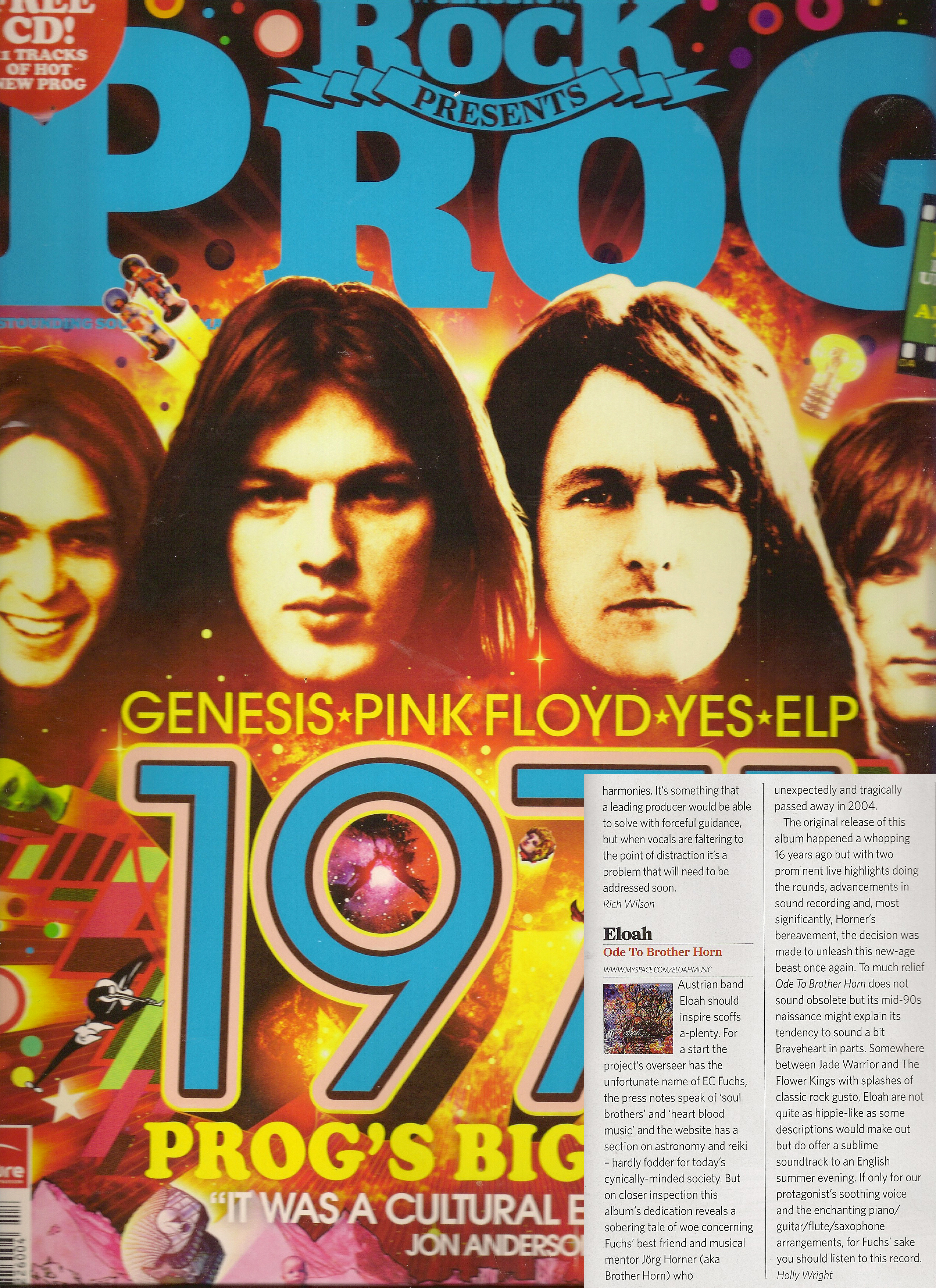
Ode to Brother Horn: Mark Johnson, Sea of Tranquiliy
This is a unique sounding release from this Austrian band. The vocals are very different than many artists within this genre. I find the closest similarities in tone and style to the Denton, Texas band Midlake. The deeper vocals and acoustic influences are apparent throughout this music. The music seems to be an attempt to differentiate and create a new genre from the tenor and higher vocal range bands of the past, aka Yes, or those that try to follow in their footsteps, aka Circa, Flower Kings, and Transatlantic. The first four songs are very acoustic driven. Then the "Iron Lady" enters to throw in some heavier guitars and drums. Then back to acoustics with some electric lead added from there on. The keyboards are very good throughout. The acoustic guitar work will help sell this album. It is wonderful.
My favorites include: "Chjong Nadah Boo, (In Vain)", "Eyes Like a Lioness", and "What You Mean to Me". They are wonderful with their acoustic guitar and echoed vocals. "Hymn to Brother Horn" is a spectacular instrumental opus befitting a wonderful tribute. The piano 'dirge' that follows includes more lighter than darker tones; in celebration of life, rather than morning death. If you like Fleet Foxes or Midlake you will most likely enjoy this album as well.
Great acoustic music for home. Unique sounding and a nice break from the popular music being released today.
Score: 3 stars
Ode to Brother Horn: Pawel 'Gnom' -MetalCentre
ELOAH is the project of Elmar Fuchs which came into being in 1993 year. The album "Ode To Brother Horn" is ninth material of this project. The album is dedicated to Jorg Horner - the brother soul of Elmar. ELOHA assembled many musicians and the artists during many years of existence...
Supposedly the music to this album came into being in early years of 90th. A lot of time passed before these compositions saw a day light. However the content of the disc can be very interesting the lovers the romantic Progressive Rock. I think that their musical inspirations reach to 70th years. Additional trump of this musical content are the gentle influences of New Age music, that is clearly audible in the first and the last tracks.
And therefore these 14 songs are mainly based on the acoustic sounds, the chords and the passages together with the parties of piano as well as with gentle percussive rhythms. Among these very romantic sounds are plaited the gentle insertions of keyboards, the calm melancholy male-female multicoloured singings and even growling screams. These vocals sometimes create grotesque or musical theater tone. Moreover we will hear here the interesting serves of bass, the guitar solos and even the melodies of saxophone. The works are the very complex and varied rhythmically with lots of beautiful melodies. Here the influences of classic music also are audible clearly (both in parties of acoustic guitars and of the piano) as well as also a the bit of movie music and Jazz.
The arrangements are very climatic, spatial, mostly calm and gentle. In moments they introduce nostalgic, sleepy and dark mood wrapped in mysticism and mysteriousness. There and here the keyboards motifs make cosmic-psychedelic climate. Among this predominant sensitivity also appear the sharper sounds and the guitar riffs, the sharper vocals and stronger hits - outright in style of Hard Rock, Heavy Metal or even Doom Metal patents which bring in the dose of dynamism and the energy.
I wondered about the comparison of ELOAH's music to would bring closer to you the compositions from "Ode To Brother Horn". However, ELOAH creates so complex thematically music (but also coherent) that it is hard to find ideal reflection. I think about some music mixture. The more diversified SIMON and GARFUNKEL with the dose of TIAMAT and early LED ZEPPELIN... But it would be only small fragment of ELOAH's composition.
The project ELOAH created beautiful music, full of artistry, very inspired by emotions and sometimes very surprising as well as masterly.
Rate: 9,5/10
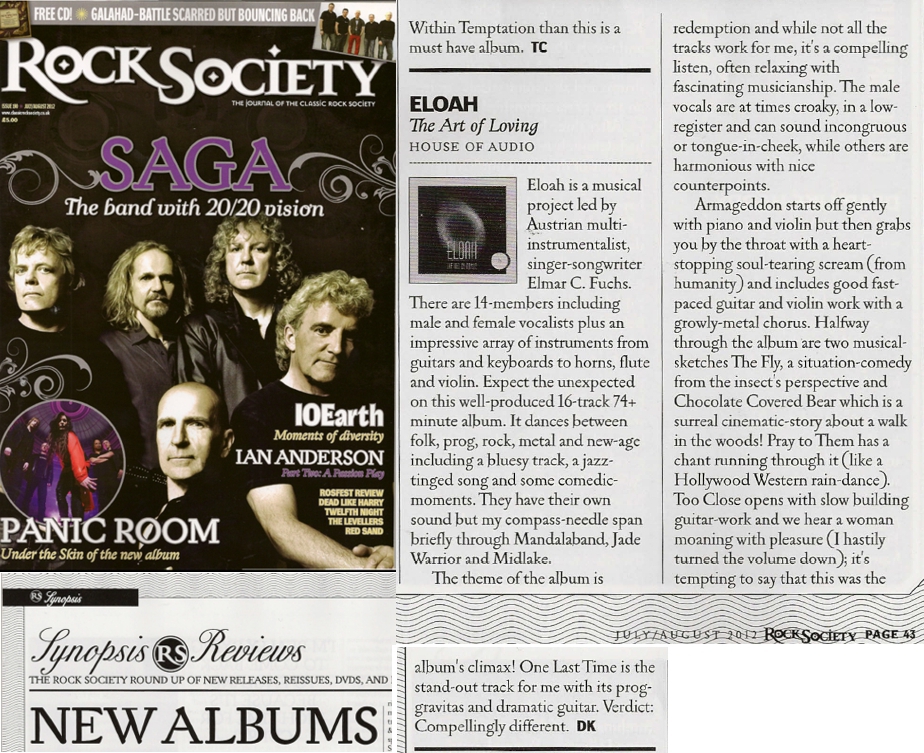
The Art of Loving: hardharderheavy.de
Auch heutzutage gibt es noch Bands, die sich nicht in eine Schublade stecken lassen möchten. Eloah ist so eine Band. Obwohl, Band ist eigentlich der falsche Ausdruck. Eloah sind vielmehr ein Zusammenschluss von Künstlern aus aller Welt, die sich neben der Musik auch der Malerei und der Poesie widmen. Das vierzehnköpfige (!) musikalische Konglomerat möchte sich stilistisch in keinster Weise limitieren lassen, was sie mit ihrem neuesten Album THE ART OF LOVING eindrucksvoll belegen. Auf dem Album bilden daher Einflüsse aus Art Rock, Avantgarde, Folklore, Jazz, Alternative oder New Age eine ebenso ungewöhnliche wie interessante Einheit. Mal hört man die frühen Pink Floyd (die ATOM HEART MOTHER-Phase) heraus, mal werden Erinnerungen an King Crimson, Simon and Garfunkel (der Titelsong) oder Captain Beefheart geweckt. Garniert wird das Ganze mit einem "Wall of Sound" aus Gitarren, orchestralen Chorgesängen, romantischen Flöten- und Saxophon-Tönen oder gar avantgardistischen Wendungen innerhalb der Songs. Was THE ART OF LOVING insbesondere auszeichnet ist die Gelassenheit, mit der Eloah hier zu Werke gegangen sind. Man gibt den Songs alle Zeit der Welt, sich aufzubauen, der Gesang taucht in die tiefsten Tiefen der Melancholie, um im nächsten Moment von harten Gitarren flankiert zu werden. Trotz der ungewöhnlich hohen Anzahl verschiedenster Instrumente wirken die Songs nie überladen, hier wird sehr songdienlich und ökonomisch gehaushaltet. Eine Track-by-Track-Bewertung macht an dieser Stelle keinen Sinn, THE ART OF LOVING sollte als Gesamtkunstwerk gesehen werden. Wer keine Berührungsängste mit Musikrichtungen wie Folk, Avantgarde, Weltmusik und Jazz hat, eingebettet in einen künstlerischen Kontext, der kann hier ruhig einmal ein oder besser zwei Ohren riskieren. Man sollte sich jedoch genügend Zeit für diese Klangreise nehmen, die selbst erfahrene Musikliebhaber an ihre Belastungsgrenze bringen könnte. Kein Album für den Mainstream. Kunstvoll! Fazit: Art Rocker aufgehorcht, Eloah dürften euer Interesse wecken. Was die 14-köpfige Band (oder vielleicht sollte man hier besser von einem Orchester sprechen) uns auf THE ART OF LOVING kredenzt ist ein äußerst interessanter Mix aus New Art Rock, New Age, Jazz, Rock, Avantgarde und Alternative. Eloah bewegen sich hier zumeist außerhalb üblicher Songstrukturen. Ungewöhnliche Instrumentierung, genreübergreifende, ausufernde Kompositionen und filigrane Arrangements finden sich auf THE ART OF LOVING ebenso wieder, wie wohlklingende Melodien. Keine Platte, die man nebenbei hören kann, sondern eine höchst ungewöhnliche und interessante Stilmischung, die ob ihrer überraschenden Wendungen keine Langeweile aufkommen lässt. Ein Kopfhörer-Album, keine Frage. Aber eines, das sich lohnt entdeckt zu werden!
Anspieltipps: "Armageddon", "The Art of Loving", "The Fly"
5/7 Punkten
Planet Zargo: Gerrit Jan De Wit
ELOAH - Planet Zargo ( Big Bad Wolf Productions) genre : Symfonische Rock
Ik kreeg een tijdje geleden een 3 tal cd's toegestuurd van Elmar C. Fuchs de drijvende kracht achter het project Eloah .. Maar helaas Planet Zargo past eigenlijk alleen maar in deze pagina met zijn mengeling van Symfonische Rock die zich moeilijk laat plaatsen. Op PZ horen we ook Meastro's Orion Roos die het album van melodie verzorgt The Glint bv is een heerlijk zelfs dansbaar nummer ( videoclip) en hoor ik wel elementen van Rockmuziek die richting Jim Steinman gaan terwijl de zang mij wat aan Mark Knofler ( Dire Straits) doet denken.. Ook voor liefhebbers van Roger Waters bied Planet Zargo het nodige.. Het album is bij vlagen soms commercieel maar laat zich niet in een hokje stoppen. 16 nummers die geen hetzelfde lijken. Uitschieters vermeld ik niet maar Wind Trough a Keyhole of time is toch wel één van mijn favoriete tracks naast The Glint.. www.eloah.at www.bigbadwolfrecords.com
Voor meer informatie omtrend Planet Zargo en andere cd's op Facebook Elmar C Fuchs
CONTACT ELOAĦ
Please send an e-mail with your query to contact (at) eloah.at
IMPRESSUM
Website Owner / Medieninhaber
Priv.-Doz. Dipl.-Ing. Dr. techn. Elmar C. Fuchs
Non-tenured Associate Professor of Physical Chemistry (University of Vienna)
Program Manager, Wetsus – European Centre of Excellence for Sustainable Water Technology
Contact
Address: Cosmic Water Foundation, Oostergoweg 9, 8911 MA Leeuwarden, Netherlands
E-Mail: contact (at) eloah.at
Purpose of the Website
Presentation of artistic, musical and philosophical work as well as related projects.
Disclaimer / Haftungsausschluss
All information on this website is prepared with care, yet no guarantee is given for correctness, completeness or timeliness. Liability for external links is excluded; only the operators of linked pages are responsible for their content. At the time of linking, no illegal content was recognizable.
Copyright
All texts, images, audio and video on this website are protected by copyright. Any use requires written permission. Band photographs by Astrid H. Paulitsch-Fuchs and Rob Meijer. Used with friendly permission.
Privacy / Datenschutz (DSGVO)
This website does not use cookies, analytics or tracking tools. Personal data is processed only if you contact the owner voluntarily. Server log files may be collected by the hosting provider for security reasons and are automatically deleted.
Validity Should parts of this Impressum become invalid under current law, all other sections remain unaffected.